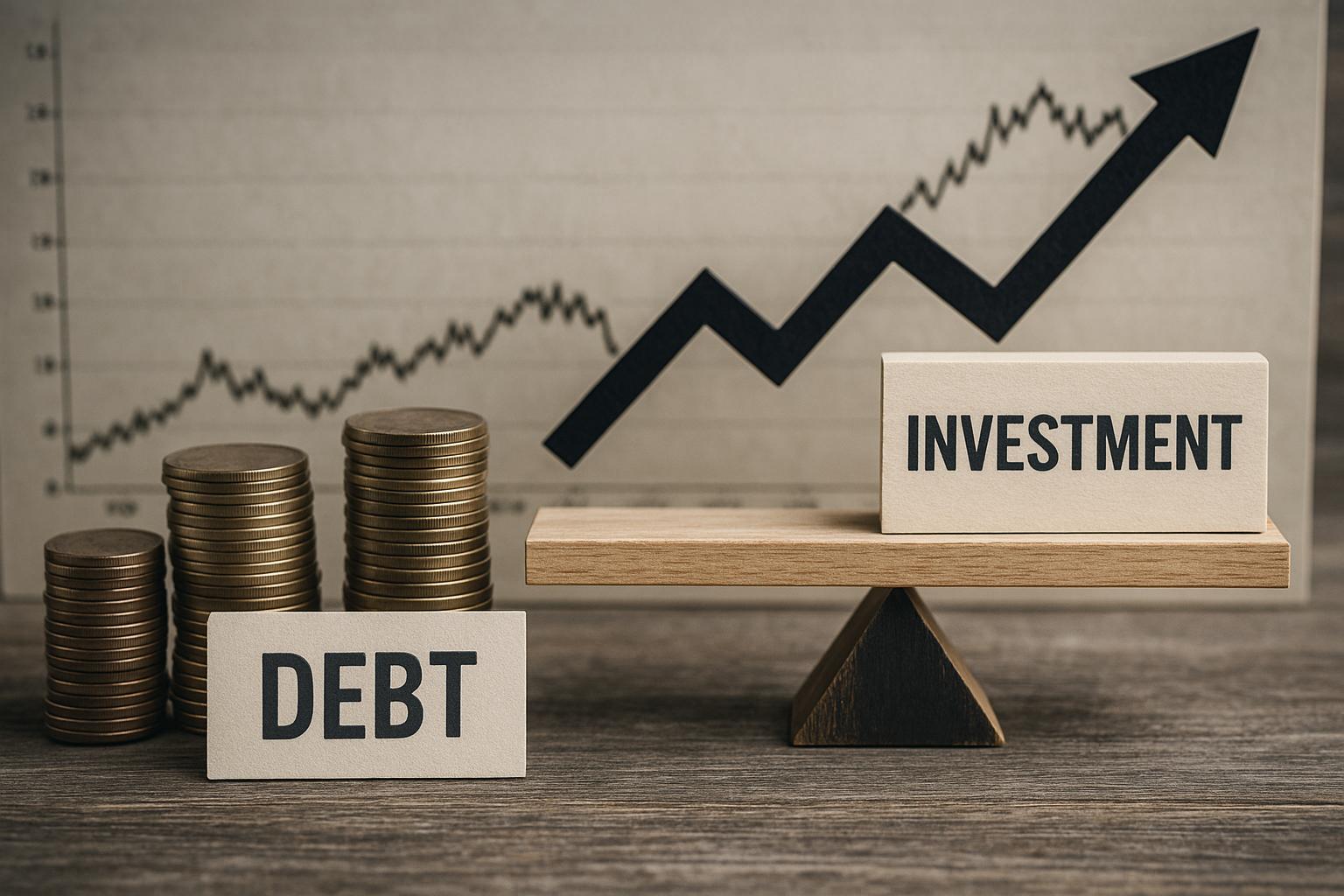
The Role of Debt in Investment Risk
Investment decisions are influenced by an array of factors, with debt playing a crucial role. Understanding how debt influences investment risk is vital for both individual investors and businesses. This exploration provides an in-depth look into the dynamics of debt and its impact on investment risk.
Debt and Leverage
In the realm of finance, debt is frequently utilized to increase leverage. Leverage refers to the strategic use of borrowed funds with the intent to amplify the returns on an investment. However, it is critical to understand that leverage not only amplifies potential returns but also enhances potential losses. When either a company or an individual capitalizes on debt financing, they may boost their investment capability, yet concurrently, they assume a higher level of risk. This elevated risk stems mainly from the obligation to make repayments and pay interest on the debt, which persists irrespective of the investment’s performance.
Debt Impact on Business Investments
For businesses, debt can serve as a vital source of capital necessary for funding expansion, as well as research and development endeavors. However, carrying debt implies that a company is obligated to meet its financial responsibilities. This responsibility can cultivate substantial risk, especially during times of economic downturns or periods of unsatisfactory company performance. In scenarios where a business is excessively leveraged and fails to fulfill these obligatory payments, it may encounter insolvency or even bankruptcy.
Debt-to-Equity Ratio
The debt-to-equity ratio is an essential tool for analyzing investment risk that is related to debt. This ratio furnishes a comparison between a company’s total debt and its total equity, offering insights into the company’s method of financing its operations. A heightened debt-to-equity ratio typically signals that a company is heavily relying on debt, potentially suggesting higher risk for investors. It’s a measure that can assist in evaluating the company’s financial health and assessing whether it wisely manages its use of debt.
Impact on Individual Investors
For individual investors, utilizing debt (often referred to as margin investing) also increases their susceptibility to market fluctuations. Employing debt in investing can produce higher returns on capital, yet it also implies that individuals become more prone to experiencing losses. In scenarios involving significant market downturns, an investor might encounter a margin call. This situation could compel them to sell assets at a loss to cover the borrowed amounts, underscoring the inherent risk in leveraging borrowed funds.
Benefits and Risks of Debt Utilization
While the risks associated with debt are noteworthy, understanding that debt also presents several benefits is crucial. Debt can offer the leverage needed to engage in substantial investments that might not be achievable by relying on equity alone. When used strategically, debt can foster accelerated growth and enhance return on equity. Despite its potential advantages, achieving a balance between the ratio of debt to equity is vital to mitigating associated risks.
To adeptly manage these risks, keeping a close eye on various aspects is essential. By ensuring a balanced debt-to-equity ratio, one can avoid the pitfalls of excessive leverage. Vigilant monitoring of interest rates and economic indicators remains critical to anticipating changes in debt servicing costs. Moreover, maintaining an emergency fund or reserve for covering debt payments during times of reduced income or revenue serves as a crucial safety net.
Managing Debt-Related Risk
The intricacies of managing risks associated with debt involve a few strategic approaches:
– Strike a balanced debt-to-equity ratio to prevent excessive leverage, ensuring that the degree of debt does not overshadow the equity.
– Regularly monitor interest rates along with economic indicators to foresee and prepare for shifts in debt servicing costs that could affect financial stability.
– Establish and sustain an emergency fund or financial reserve aimed at covering obligations tied to debt during times when income or revenue dips unexpectedly.
These strategies are foundational in managing the inherent risks tied to debt, facilitating smoother sailing through the potentially treacherous waters of investment risk.
Conclusion
Investing by utilizing debt aptly demonstrates itself as a double-edged sword. On one hand, it offers an increased potential for returns; on the other, it equally intensifies the associated risk. Therefore, meticulously weighing both the benefits and the potential pitfalls while maintaining a strategic approach to managing debt is pivotal in ensuring that debt serves as a facilitator rather than an impediment to investment success. Conducting thorough due diligence, engaging in constant financial analysis, and deploying effective risk management strategies emerge as vital elements of navigating the multifaceted interaction between debt and investment risk.
For further reading on financial risk management, exploring resources offered by professional financial advisory platforms and educational institutions specializing in finance might prove insightful. Doing so could unveil deeper understanding and enhance decision-making capabilities in the financial landscape.
This article was last updated on: August 25, 2026